
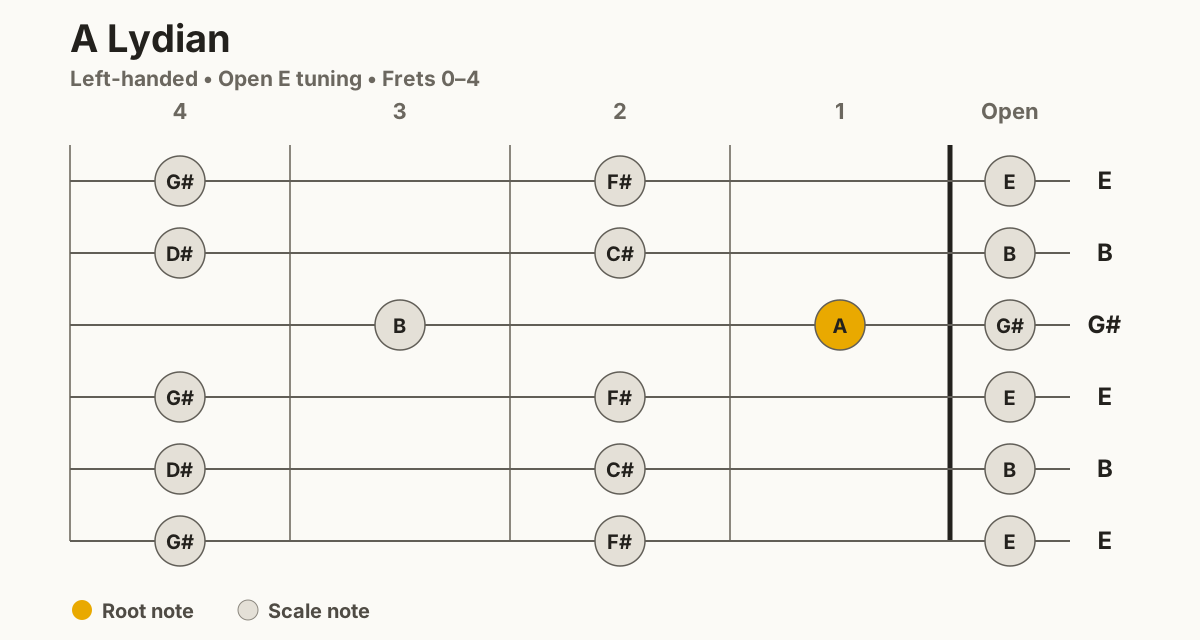
A Lydian in Open E tuning uses A, B, C#, D#, E, F#, G#. The highlighted notes show A, the tonic. Start with the displayed fret range and practise a short phrase that returns to A.
Left-handed scale chart
What you are playing
Scale notes: A, B, C#, D#, E, F#, G#. Standard tablature stays unchanged, so you can use the same note order as any mainstream lesson or transcription.
The diagram labels use sharp note names. Equivalent names such as D# and Eb identify the same fret; a theory book may use the flat spelling for the same pitch.
Practise it for ten minutes
Play Frets 0-4 slowly up and down. Say the root note A each time it appears, then repeat the pattern with a steady pulse.
- Start Here: Start with the frets 0-4 view. That window gives you a manageable note map without implying that it is a conventional numbered scale box.
- Hear The Color: Bring out D# so the bright raised-four colour actually comes through.
- Chart Check: Read the string labels before playing. High strings run across the top of these horizontal scale charts, low strings across the bottom, and the nut is on the right.
- Open E Watchpoint: Because the guitar already spells a major chord, use the left-handed chord chart to avoid over-reading every voicing as a standard-tuning shape. It makes bright rhythm guitar and open slide vocabulary feel immediate.