G5 uses the notes G, D. This left-handed chord chart puts the shape in your playing orientation. Tune to DADGAD before trying these shapes; the string labels on each chart show the tuning used.
Three playable chord shapes
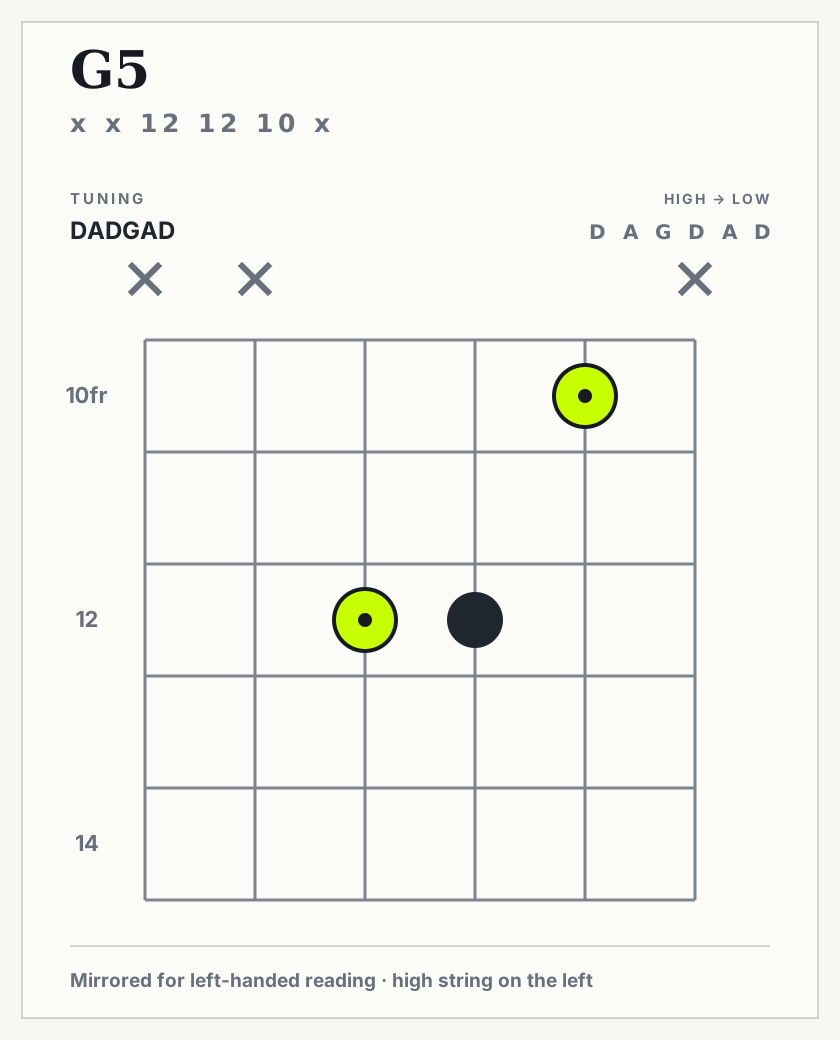
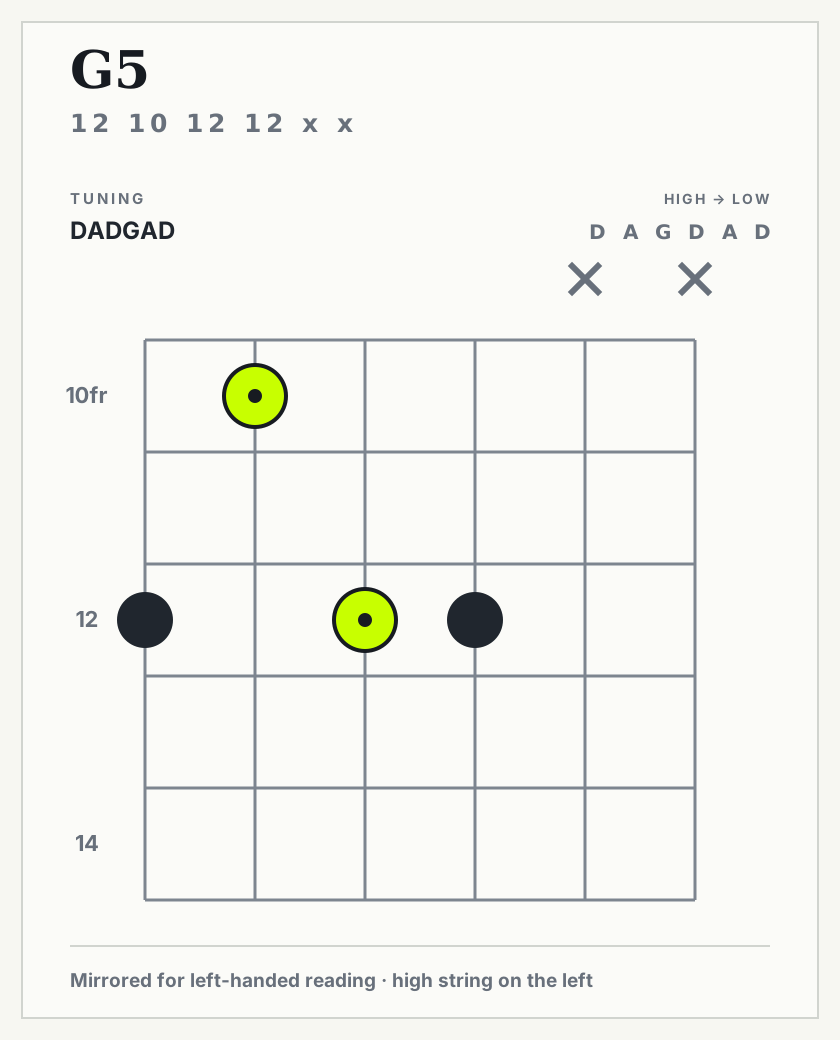
All three charts use DADGAD tuning. Compare the named shapes and their fret positions, then choose the one that fits your chord change. The shapes shown are alternatives, not a progression.
Tuning, lowest to highest: D – A – D – G – A – D. Chord names describe the notes that sound in this tuning.
Shape 1
A5 shape · fret 10
Shape 2
Compact voicing · fret 5

Shape 3
Compact voicing · fret 10
What you are playing
Chord notes: G, D. Standard tablature stays unchanged, so you can use the same note order as any mainstream lesson or transcription.
Practise it for ten minutes
Form the shape without strumming, check each intended string, then release and rebuild it five times before practising slow four-beat changes.
- Shape Type: This shape behaves like a movable barre-style grip centered around fret 12, so focus on even pressure before trying to change chords quickly.
- String Check: Fret G (string 3) at fret 12, D (string 4) at fret 12 and A (string 5) at fret 10, mute D (string 1), A (string 2) and D (string 6).
- Grip Control: Use the mirrored chart to keep the root on the correct bass-side string so palm muting and downstrokes line up cleanly.
- Next Scale: The quickest lead connection from this chord is G Minor Pentatonic. Start there if you want the page to turn into a chord-to-scale practice loop.